Qalibaf: US plot along Iran’s western border thwarted
TEHRAN — Iran’s Parliament Speaker Mohammad Baqer Qalibaf said on Tuesday that a US attempt to launch security and military operations against Iran from Iraq’s Kurdistan Region during the 40-day war had been thwarted through cooperation with Iran’s partners in the region and a timely response by the Iranian armed forces.
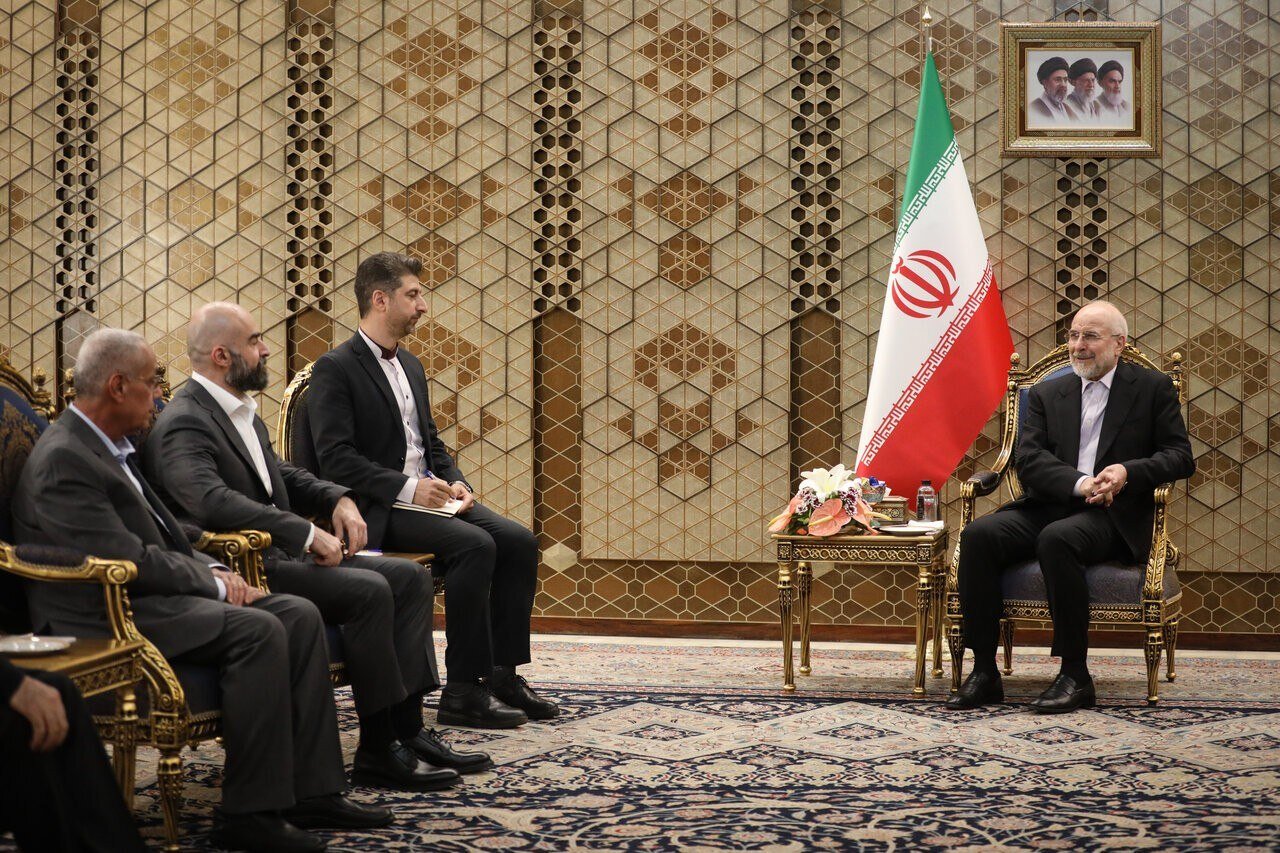
Qalibaf made the remarks during a meeting in Tehran with Bafel Talabani, president of the Patriotic Union of Kurdistan (PUK), who is heading a senior delegation on a visit to Iran. The two sides discussed regional security, border cooperation and ways to expand political and economic ties between Iran, Iraq and the Kurdistan Region.
Qalibaf said the conflict had demonstrated the importance of close relations between Iran and its neighbors, particularly in the security, political and economic spheres. Referring to the activities of separatist groups near Iran’s western borders during the war, he said the United States had sought to exploit the Kurdistan Region as a potential route for military action against Iran.
“During the 40-day war, the Americans hoped to carry out security and military operations against Iran from the Kurdistan Region of Iraq,” Qalibaf said, adding that the plot was defeated through cooperation from Iran’s partners in the region and the timely response of the Iranian armed forces.
He stressed that Iran should further strengthen its ties with neighboring countries to prevent hostile actors from exploiting regional divisions. In particular, he called for broader cooperation with the Kurdistan Region in both security and economic affairs.
Qalibaf also said Iran and Iraq should remain vigilant against attempts by the United States and Israel to create divisions between the two neighbors. He argued that such efforts could intensify following 'Washington being forced to leave Iraqi territory and airspace.'
The Iranian parliament speaker called for greater coordination and mutual trust between Tehran, Baghdad and the Kurdistan Region, saying closer relations would help prevent external powers from turning security challenges into sources of regional tension.
He also highlighted the long-standing relationship between Iran and the Talabani family, recalling the late Iraqi President Jalal Talabani as a longstanding and loyal friend of Iran. Qalibaf expressed hope that Bafel Talabani’s visit would lead to further expansion of political, security and economic relations.
Emphasize border security and counterterrorism
Talabani also held talks with Iranian Foreign Minister Abbas Araghchi, with security cooperation, counterterrorism and economic and trade relations forming key elements of the discussions.
Araghchi described Iran’s relations with the Iraqi government, people and Kurdistan Region as positive and constructive, saying the extensive economic and commercial potential along the common border offered significant opportunities for expanded cooperation.
He described the outlook for Iran-Iraq relations, particularly ties with the Kurdistan Region and Sulaymaniyah, as bright and promising, and reaffirmed Tehran’s readiness to deepen engagement with the region.
Security cooperation featured prominently in the talks. Araghchi said Iran was prepared to strengthen coordination along the common border and expand joint efforts against terrorism, while warning that Iran’s adversaries could seek to exploit militant activity and insecurity to create tensions between neighboring countries.
The foreign minister stressed the importance of implementing the Iran-Iraq security agreement and called for close coordination to prevent armed groups operating from Iraqi territory from posing threats to Iran’s security.
He also warned against false-flag operations aimed at creating mistrust and divisions among neighboring states, urging regional actors to remain vigilant against attempts to manipulate security incidents for political purposes.
Tehran has repeatedly emphasized that the implementation of the Iran-Iraq security agreement is essential to addressing security concerns along the two countries’ shared frontier and preventing armed groups opposed to Iran from using Iraqi territory to threaten the country.
Talabani: Iran’s war is our war, its victory is our victory
Talabani, for his part, said his visit to Tehran was aimed at expanding cooperation between Iran and Iraq in political, security and economic fields.
Thanking Iran for its support for Iraq and the Kurdistan Region during difficult periods and times of conflict, the PUK leader described the relationship between the two sides as close and strategic.
“Iran’s war and hardships are our war and hardships, and its victory is our victory,” Talabani said, underscoring 'the PUK’s commitment to maintaining strong relations with Tehran.'
He also said the PUK had regained a strong position in Iraq and was seeking to further expand its political, security, economic and trade relations with Iran.
Talabani made clear that the Kurdistan Region would not allow its territory to be used as a base for activities threatening Iran’s security. He reaffirmed the PUK’s readiness to cooperate in implementing the Iran-Iraq security agreement and strengthening coordination along the shared border.
Security and trade form a single strategic agenda
The discussions in Tehran underscored the close link between security and economic cooperation along Iran’s western frontier. For Tehran, expanding trade and cross-border commerce with Iraq and the Kurdistan Region, particularly Sulaymaniyah, goes hand in hand with efforts to maintain a secure and stable border.
Iran has consistently emphasized its desire to maintain constructive relations with both Baghdad and the Kurdistan Region while ensuring that Iraqi territory is not used against its national security.
The meetings with Qalibaf and Araghchi also reflected Tehran’s broader approach to relations with its neighbors: strengthening economic interdependence, deepening political coordination and establishing closer security cooperation as a means of preventing external actors from exploiting regional fault lines.
Against this backdrop, both Qalibaf and Talabani stressed the importance of preventing Iraqi territory from becoming a source of insecurity for Iran, while reaffirming their commitment to closer cooperation in security, counterterrorism, trade and economic affairs.
Leave a Comment